

Racing services A–Z
Purchase advisory, training placement, and race planning—transparent and data-driven.
Acquisition
When purchasing a racehorse, we recommend acquiring a yearling at auction, either directly or via our representation.
Auction houses typically vet the yearling’s health, and the development upside of such a young horse is exponentially higher than with older stock.
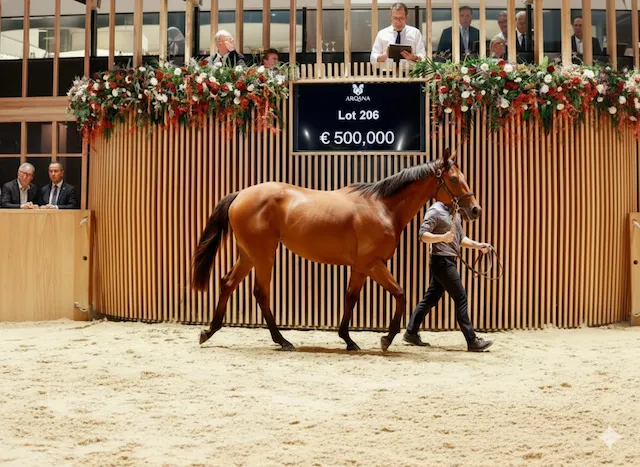
The prerequisite is choosing the right trainer. We analyse both parents’ bloodlines, calculate production costs up to the sale date, and factor in the sire’s stud fee. This allows us to determine a precise value and assemble a shortlist that matches the client’s budget while offering strong value for money.
Once the client decides to buy, we manage every on-site detail—from the inspection through to the bidding strategy—while ensuring our maximum bids always stay within the agreed budget.
After a successful purchase we arrange transport to the trainer so the racehorse education can start immediately.
Trainers
As already mentioned, selecting the trainer is fundamental to turning the horse into a finished racehorse.
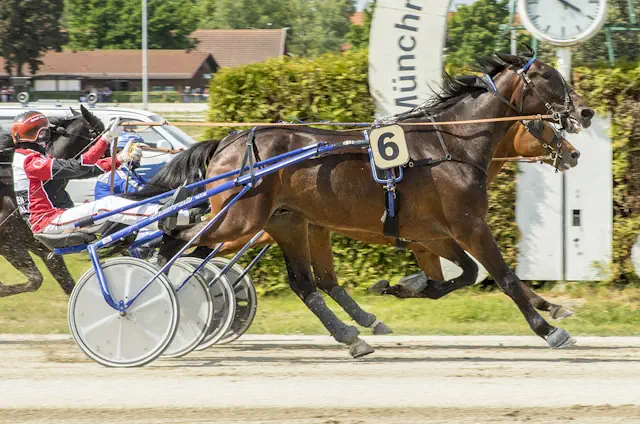
We only recommend trainers who have repeatedly proven they can mould young horses into performers capable of measuring up against the best of their crop.
These conditioners understand how to collaborate with veterinarians on each horse’s health profile so they can push for maximum progress without overtaxing the horse.
Race planning
Even though a horse never stops developing, the primary goal is to qualify it for prize-money races as quickly as possible.
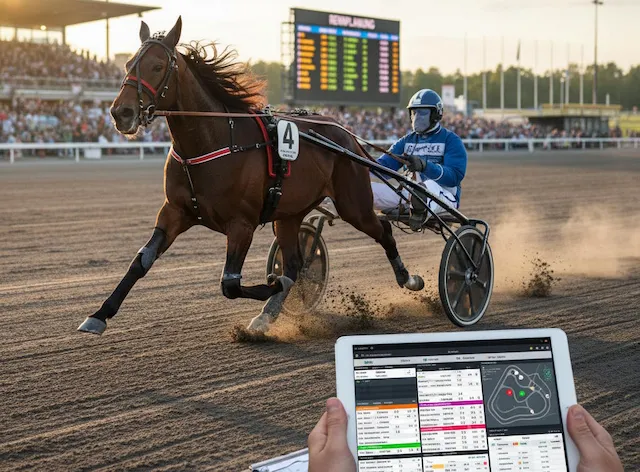
To achieve that we survey every race the horse could theoretically enter and design a campaign that fits its profile.
Prize purses, travel costs, the strength of the opposition, and the horse’s own ability all flow into that decision.
Once the right race is identified, we secure the ideal driver—often a single nose decides the purse, so elite drivers are a crucial lever.
Planning
- Define target races
- Analyse distance profiles
- Estimate field strength
- Set seasonal objectives
Driver scouting
- Review track history
- Analyse driving style
- Check availability
- Handle compensation
Forecasts include confidence ranges; no guarantee of success.